
Martyn’s Law – officially called the Terrorism (Protection of Premises) Act 2025 – is a new piece of legislation that was created to strengthen safety protocols in public venues and events.
The new law is named after Martyn Hett, who was tragically killed in the Manchester Arena attack in 2017. His mother, Figen Murray, campaigned tirelessly for the introduction of the new law, which was created to strengthen security at public premises and events. It will establish a minimum legal standard of security at venues and events that host more than 200 people.
Martyn’s Law means that venues need to take proactive steps to ensure the safety of occupants and visitors and reduce the risk of physical harm. Although the law was passed on 3 April 2025, it won’t come into effect until at least 24 months from this date, giving venues plenty of time to prepare.
The difference between standard tier and enhanced tier
The kinds of measures that venues need to implement depends on the tier that the new law assigns them. There are two tiers: Standard and Enhanced.
Premises and events that fall under the Standard tier are those that host between 200-799 people at the same time. There will need to be a named responsible person for each premises, who needs to notify the Security Industry Authority (SIA). This person will be responsible for ensuring that appropriate security measures are in place, including procedures for:
- Evacuation – getting people out of the building safely
- Invacuation – bringing people into the premises if necessary
- Lockdown – securing the premises to restrict or prevent an attacker gaining access
- Communication – alerting people of danger
This tier is more about introducing more stringent safety procedures and training staff to make sure that everyone knows how to react in the event of an emergency.
If your premises has a capacity of 800 or more, it will fall under the Enhanced tier. Venues of this type will also need a responsible person to notify the SIA, and will also need to implement the security measures listed above. However, Enhanced premises also need to consider public protection measures that will mitigate risk of harm and offer greater public protection. These measures are in relation to:
- Monitoring the premises/event and the immediate vicinity
- Controlling the movement of people around the premises
- Physical safety and security of the premises/event
- Security of information that might assist in the planning or execution of terrorism
These measures can be implemented through training people, introducing new processes, or carrying out physical security measures.
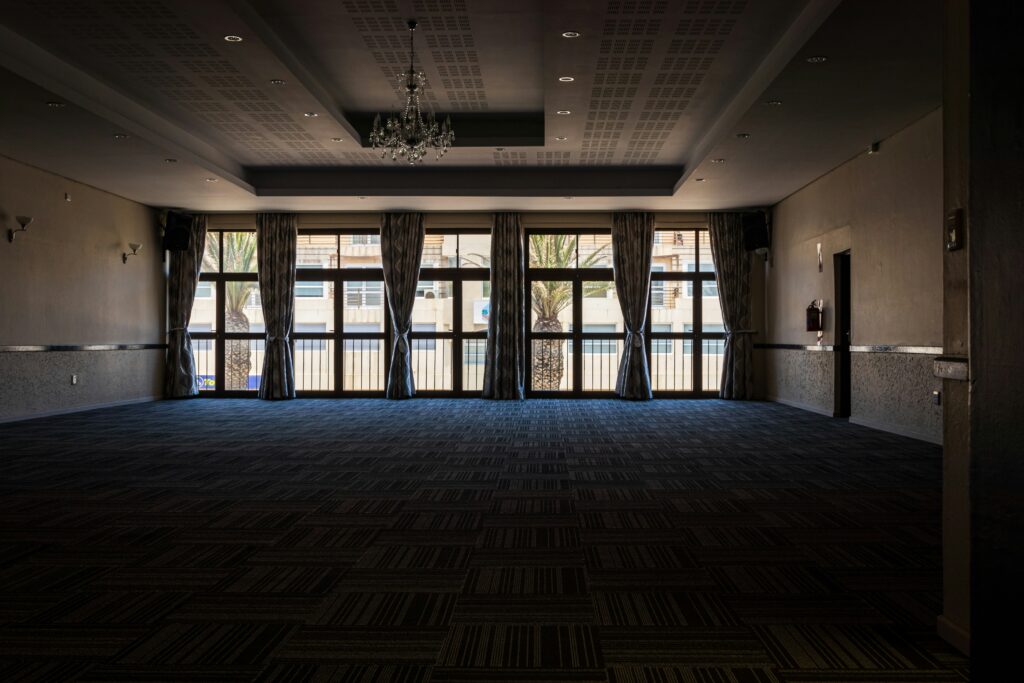
Why physical security enters the discussion for larger premises
Martyn’s Law focuses on proactive security measures by identifying potential weaknesses in how venues operate, rather than reacting after an incident has occurred.
Large venues concentrate hundreds or even thousands of people in a confined area, which can make them a significant target for terrorist attacks. Introducing more stringent physical security measures, such as thorough bag checks and CCTV systems, can act as a deterrent, as would-be attackers are more likely to be caught before they gain access. Having physical security measures can act as a deterrent.
In the event of an attack, a venue will need to be able to respond quickly and effectively. In a bigger venue, this can be harder to control, as there are more people across the building. Having physical safety features like clear evacuation routes and barriers can help a crowd move through the venue more efficiently and safely.
The actual building itself can also play a role in the safety of larger venues. Physical protective measures like reinforced windows and doors, barriers around the perimeter of the venue and access control systems can be used to delay or prevent forced entry, and make the venue safer for occupants in the event of an attack.
Why glazing deserves more attention in security reviews
Glazing is often overlooked during security reviews, despite the fact that it tends to be the weakest point in a building. This means that it is particularly susceptible to bomb blasts, break-ins and attacks, as it is fragile and shatters easily. A broken window is easy for intruders to force through and gain access to a building.
As well as being relatively easy to break, glass can be incredibly dangerous in the event of an attack. The force of a bomb blast or explosion can cause glass to shatter into numerous shards, which act like projectiles that can cause significant injury. Injuries from broken glass are extremely common in attacks, so considering ways to strengthen glazing can significantly reduce this risk.
What blast protection window film and anchoring systems are designed to do
Blast protection window film is designed to withstand impact and protect against damage. In the event of an attack, window film will keep the shards of glass safely in the window frame. Because it holds the glass shards together, it doesn’t create a gap in the window where attackers can easily gain access, which also gives staff more time to react and call the emergency services.
Anchoring systems are a unique type of glass containment system, which can be used in conjunction with blast protection film for added security. It further strengthens a window by holding the glass in place if it gets broken – in fact, it has achieved the highest performance rating of any glazing retention system in the world.
Questions venue and estates teams should ask now
It’s important for venue and estate teams to start planning for Martyn’s Law as soon as possible, to make sure that your staff are fully trained and that your building is protected. As you start preparing, you should be asking:
- What are the most likely scenarios that we should be planning for?
- Have we carried out a thorough risk assessment of the building?
- How secure is our venue currently against forced entry?
- Are there vulnerable areas of the building that need reinforcing?
- Is there comprehensive CCTV in the building, and it is monitored regularly?
- Are there clear evacuation routes?
- Do staff know their responsibilities in the event of an emergency?
- Do we know how to communicate with each other and visitors in an emergency?
- Who is going to be responsible for decision making?
- Which level of Martyn’s Law applies to our building?
Having a comprehensive plan in place makes sure that you are adhering to the upcoming legislation, but also means that if the worst does happen, your venue is prepared to react appropriately to keep people safe.
Speak to OVAGLAS about assessing glazing risk in your building
As part of your practical preparation for Martyn’s Law, reviewing the glazing risk in your building can be an excellent precautionary measure. To find out more about how window film can add extra security to your commercial property, get in touch with the OVAGLAS team.
.svg)


