

OVAGLAS has been shortlisted for Collaboration of the Year at the RAC Cooling Industry Awards 2026, alongside Kenfield and Aerofoil Energy. The nomination recognises a partnership between three British businesses committed to innovation, quality and sustainability in commercial refrigeration.
Collaboration Driving Innovation
The RAC Cooling Industry Awards celebrate the people, projects and businesses driving progress across the refrigeration, air conditioning and heat pump sectors. Our shortlist recognises the strength of our partnership and the value of collaboration in developing practical solutions for the industry.
At OVAGLAS, we believe the best results come from working together. Collaboration allows us to develop innovative products that deliver measurable benefits for customers and support a more efficient, sustainable refrigeration industry.
Clarifoil for Commercial Refrigeration
Our Clarifoil® Anti-Fog Film improves product visibility by preventing condensation on fridge and freezer doors. It also helps reduce energy consumption and carbon emissions, offering retailers a simple retrofit way to improve the performance and appearance of existing freezer cabinets.
We are delighted to be recognised alongside Kenfield and Aerofoil Energy and look forward to celebrating with our industry peers at the RAC Cooling Industry Awards 2026.

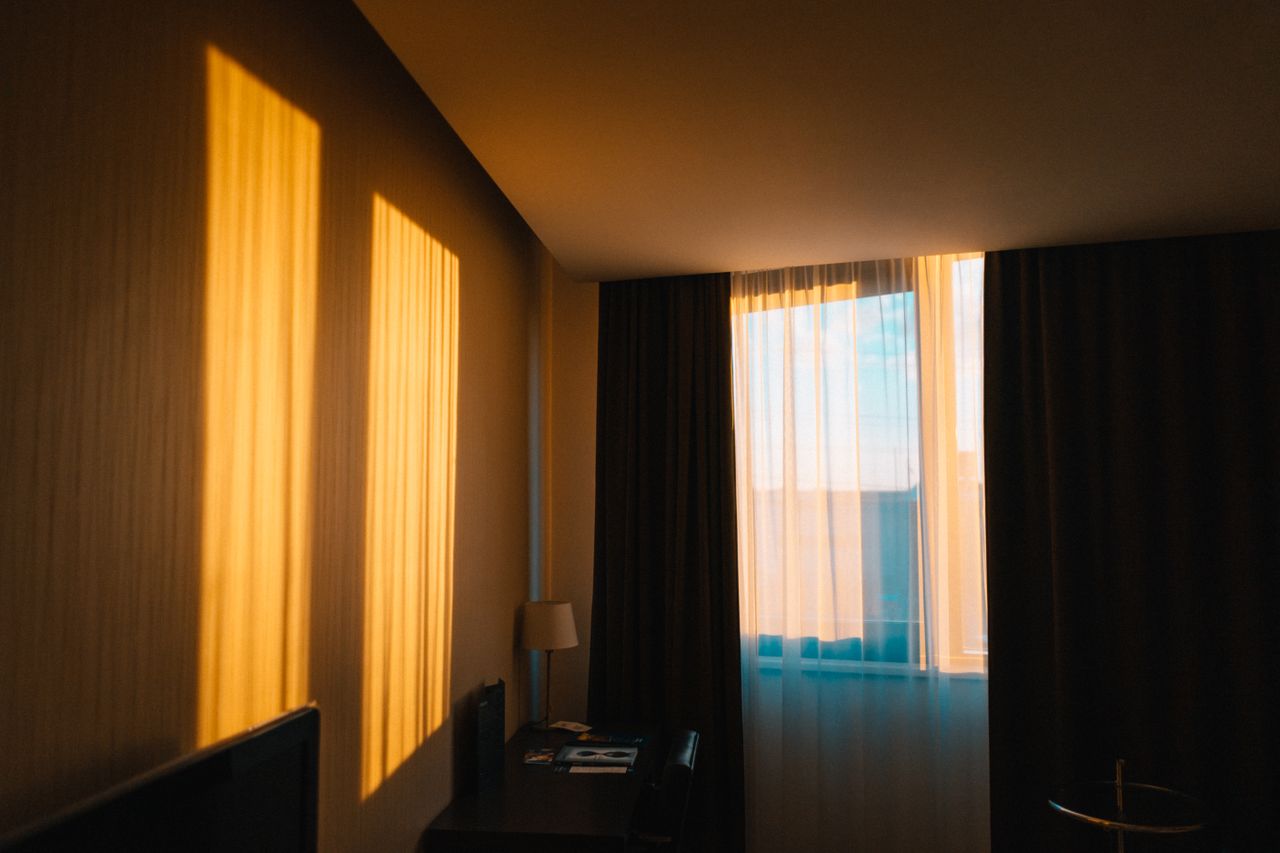
One viral hack that’s currently doing the rounds is putting tinfoil on windows to keep the heat out. We can definitely see the appeal – it’s cheap, easy to access, and when it’s sweltering inside most of us will give anything a go to bring the temperature down a few degrees. So, does putting foil on your windows really work, or is there a better window hack?
How foil works to block out heat
The thinking behind this hack is that foil is reflective, so can ward off incoming rays. As sunlight contains invisible infrared radiation (heat), when this hits standard glass windows it passes straight through them. The heat then gets trapped inside the room, warming it up.
However, because of the reflective properties of the foil, as well as its low emissivity – aluminium can reflect a significant amount of radiant heat – it can bounce the infrared rays away from the window, minimising the amount of heat that can get inside a building.
Does foil on windows actually work to keep a room cool?
Anecdotally, some people do find that it can drop the temperature by a few degrees. However, one key mistake is putting foil on the inside of the window, which we’ve seen a lot of people doing. Putting it on the inside of a window can trap solar heat, which can create extreme thermal stress between the glass and the foil. As this will heat up the glass unevenly across the window pane, the risk of the glass breaking is significantly higher.
Double or triple-glazed windows are at particular risk, as it can cause the internal pane to expand and potentially even shatter. Sticking foil to the outside of a window can prevent this from happening, and in a pinch might make a hot day indoors feel a bit easier.

What can be used instead of aluminum foil on a window?
Foil may offer some temporary relief, but it’s not an ideal solution in the long run – especially not for commercial properties. For properties with a lot of windows, or windows above ground floor level where applying foil to the outside can be risky, using foil won’t be as effective. Plus, foil-covered windows make a room much darker, and for a business especially, don’t give off the most professional appearance. Blackout blinds or curtains can offer similar properties, but again, come at the expense of natural light.
For a long-term solution, we would recommend solar control window film. Sometimes referred to as heat rejection window film, it is designed to better regulate the transmission of heat and light through glass windows.
Solar control film is a lightweight film that comprises layers of polyester that reflect and absorb certain wavelengths of sunlight before it has a chance to penetrate the glass. This means that excess heat is kept out of the property, keeping the temperature more stable. One of the major benefits of solar window film is that you can still see through them, and they don’t block out natural light.
It’s a simple and effective way to regulate the temperature inside a commercial property. Naturally, it costs more than a roll of tin foil, but many people find that it can save them money on energy costs as they have less need to rely on expensive cooling systems. In the winter, the film has the opposite effect – it can conserve heat to keep it cosier, reducing the need for central heating. With more hot summers on the horizon, solar film makes an excellent long-term investment for commercial properties that want to make working conditions more comfortable for employees.
Windows are the weakest point of a building, as they are more susceptible to damage and breakage. Smash-and-grab burglaries by opportunistic thieves aren’t uncommon, and the threat of attacks – whilst uncommon – is something to be considered. A broken window is easy for intruders to force through and gain access to a building, so finding ways to improve the security of your commercial property is key.
We have outlined some of the most common ways to upgrade the safety of your windows.
Lockable windows
If you’re getting new windows fitted – especially if they are at ground level – go for lockable ones. The most secure lockable models come with key operated, multi-point locking systems. Most modern windows can only be opened with a key to turn the handle, which can help to prevent intruders from forcing it open.
Locks can also be retrofitted to existing windows, using tools like sash jammers – which can be attached to the window frame to physically stop the window sash from opening inwards – or window restrictors, which are connected between the window frame and sash to limit how far it can open.
Security bars
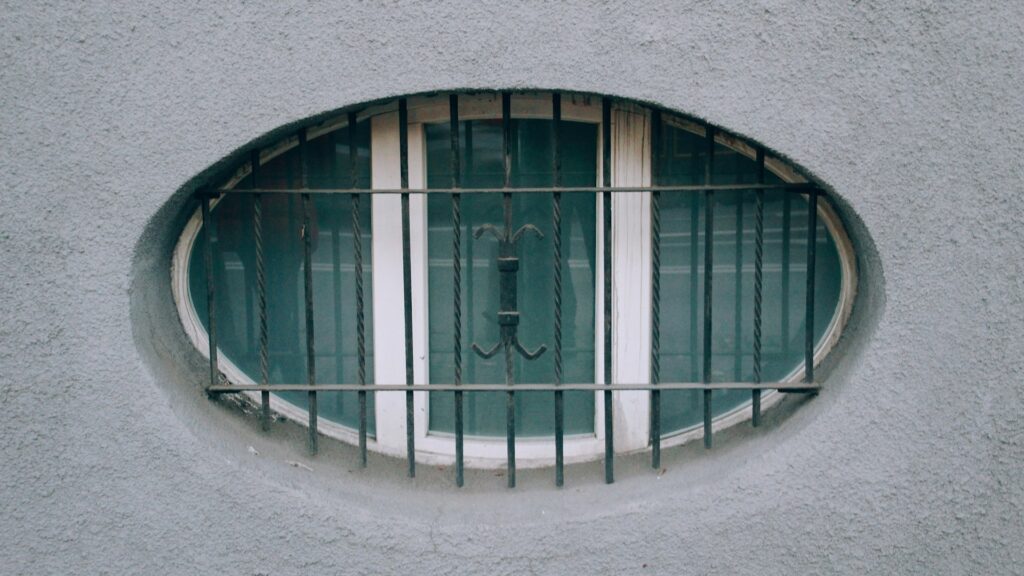
Security bars are sturdy metal barriers – usually steel or cast iron – that can be attached to either the inside or outside of windows. Also referred to as ‘burglar bars’, they act in part as a visual deterrent, as they signal to would-be thieves that they are dealing with a well-secured property. They also make it very difficult for them to pry open the windows.
However, a major downside of security bars is that they can be a safety hazard for building occupants. Having fixed bars means that in the event of an emergency, like a fire, they block potential escape routes. Additionally, they reduce the amount of natural light that gets in and obscure the view. And, let’s face it – they don’t exactly make a property look welcoming!
Roll down shutters
Similarly, roll down security shutters are sturdy metal blinds that can be attached to the outside of windows and pulled down when the property is vacant. Shutters make an excellent deterrent because they are a physical barrier to entry. Usually made of steel or aluminium, they make it very difficult to break through, which also means they act as a visual deterrent for opportunistic intruders. However, shutters only add protection when the property is vacant, such as at night, which can leave windows vulnerable during the day.
Alarm systems
There are a range of window alarms on the market, including magnetic contact sensors that trigger an alarm when a window is opened, and vibration sensors, which are triggered when the glass is struck. Window alarms can range from small, budget-friendly battery powered devices, to smart ecosystems that you can monitor from your phone. Although they don’t reinforce a window or add any physical protection, they can be great to have in tandem with other physical security measures.
Security window film
Security window film is a lightweight polyester film that is applied directly to existing glass to reinforce it, making it more durable and resistant to breakage. In the event of impact, the film holds the shards of glass together to prevent injury. Because the glass is held together in the frame, it also makes it much harder for would-be burglars to get inside the property, as it doesn’t give them an easy access point.
It’s not just effective against break ins – security window film can also provide shatter resistance in the event of accidents, natural disasters or even bomb blasts, which is of a particular priority for high-profile businesses, or those with a large public presence, such as government buildings.
Safety window film adds extra protection to a window without sacrificing natural light or visibility, and it is quick and easy to apply.
Upgrade the security of your windows with OVAGLAS
OVAGLAS provides a range of security window films that can be applied to existing glass, reducing the need for expensive new glazing. Our security films are designed to withstand impact, protect against accidental damage, and prevent potential dangers caused by shards of broken glass.
If you have any questions about our security window films – or any of our other products – get in touch with our team and we’ll be happy to help.

As much as we all love a gloriously sunny day, it does lose its appeal when you’re stuck inside a hot workplace all day. A surprising amount of commercial properties just aren’t cut out to handle heat, quickly turning into something akin to a sauna – not ideal when you’re trying to get through a day’s work.
If every hot day in the workplace you find yourself searching to find if there’s a maximum legal workplace temperature, it might be time to do something about it.
Why do windows let in so much heat?
A significant amount of heat gain can be attributed to windows, mostly because they let in so much sunlight, particularly infrared radiation. Even a well-insulated window struggles to block out much solar energy, so when it’s sunny outside, it heats up the interior surfaces in a room, which will also then radiate heat and contribute to warming the space. Much like a greenhouse, glass windows will keep the heat trapped inside.
Double-glazed windows are far better at insulating a property, as they have an air or gas pocket between the panes that helps to reduce the movement of heat. However, they can’t stop solar radiation from getting inside your property, so some heat transfer can still be expected.
How to reduce heat transfer via windows
Curtains or blinds
Curtains or blinds can be very handy at blocking light, particularly blackout curtains or blinds. Blackout curtains and blinds are made from thick, dense fabric that can block out the majority of natural light. Some also come with thermal lining to further help keep a room cool. Remember that curtains and blinds will need to be drawn well before the sun is at its peak – usually around midday, but it can still be very warm outside before this – to make sure enough heat is being blocked.
Keeping blinds and curtains drawn can also help to reduce glare, which can cause eye strain and take a hit on productivity – and it’s an easy solution, as if you already have curtains and blinds fitted, it takes a matter of seconds to close them.
Of course, the major downside to curtains and blinds is that you end up blocking out most – if not all – of the sunlight! Bright days can be few and far between, so working in a dark room when the sun is shining outside isn’t ideal. They can also reduce airflow in a room, meaning that heat stays trapped, making the room feel stuffier.
Double-glazed windows
If the windows in your building are single glazed, they will let in a lot more sunlight than double-glazed windows, which can make the room feel uncomfortably hot. They also don’t have as much UV protection as double-glazed windows, which can lead to furniture fading or even skin damage.
Double-glazed windows are a more energy efficient option, as the gap between the two panes acts as insulation, which reduces heat transfer. During the summer, this allows less sunlight to come through the windows, which helps to keep the indoor temperature more comfortable. Over time, this will help save money from cooling costs – such as fans or air conditioning – as well as heating costs in winter, as it can also work to stop the heat escaping.
Although double-glazed windows can be a great long-term investment, they definitely aren’t a quick fix – if there’s a sudden heatwave forecast, getting new windows fitted is not the answer! It can also be very expensive to replace your windows, especially in a large building.

Low-E glass
Low-E glass – also known as low-emissivity glass – is a type of glass that has a microscopic, clear coating that helps to reduce thermal transfer. Low-E glass can be beneficial in both summer and winter, as in summer it helps to keep heat out, whilst in winter it retains the warmth.
The coating on Low-E glass is made of metallic oxide, meaning that it deflects sunlight – including harmful infrared and UV rays – back outside, whilst still letting in plenty of natural light. Similarly to double-glazing, Low-E windows keep energy costs down by reducing the need for you to use heating or cooling systems.
However, the downside to Low-E glass is also the same as double-glazing – it’s not a quick solution, and the treated glass can be significantly more expensive than regular glass. As a long-term investment it can be hugely beneficial for your business, but there is a significant initial cost.
Solar screens
Solar screens are lightweight panels made of mesh that are usually custom-designed to the size of your windows to fit neatly over them. The mesh is usually made from polyester or fibreglass that is coated with a UV-resistant material, which can help to filter out solar radiation.
They are typically fitted on the outside of the window to stop the sun from directly reaching the glass, which is where the majority of solar gain tends to occur. This means that less heat is absorbed by the glass windows, therefore less heat is passed into the room, keeping it a more comfortable temperature.
Solar screens do still let some natural light through, due to them being made of mesh, although it will be duller than with a clear window. Another downside of solar panels is that they aren’t suitable for all window orientations, as some windows don’t receive as much sunlight, so a solar panel might end up blocking out the light unnecessarily.
Solar window films
Solar window film – also known as solar control window film – is a thin, durable film that is applied to windows to help reduce heat transfer, filter out UV rays and minimise glare.
Solar film has a reflective quality which allows it to reflect a certain amount of the sun’s rays before it reaches the glass, and also absorbs some of the solar heat to prevent it from getting inside the building. It won’t stop natural light from getting in, but it will mean that the temperature inside stays far more stable.
Many types of solar film block out a high percentage of UV rays, which can fade interiors and furnishings, and helps to reduce glare for improved visibility. As window films can block a pretty significant amount of heat, it means there is less need to be reliant on air conditioning, which can help your business save some money. Similarly, in winter, window film works as insulation to better retain heat.
Window films are an unobtrusive option, as they simply adhere to your existing windows, and can be installed quickly and easily. Although you can apply window film yourself, it’s definitely better to leave it to the professionals!
Solar gain protection from window film
As window film specialists, we offer a simple and cost-effective way to minimise excess solar heat gain and glare, leading to a more comfortable working environment – not to mention reducing your energy costs!
With summer rapidly approaching, there’s no better time to upgrade your windows – get in touch with the OVAGLAS team.
.svg)


